The 2026 MSP All-Class Top 10 Preseason Football Rankings
1)Millard South, 2) Omaha Westside, 3) Millard North, 4) Creighton Prep, 5) Elkhorn South, 6) Kearney, 7) Papillion-LaVista South, 8) Omaha North, 9) Papillion-LaVista and 10) Bellevue West. Contenders: Millard West, Bennington, Omaha Westview, Elkhorn North and Lincoln East.
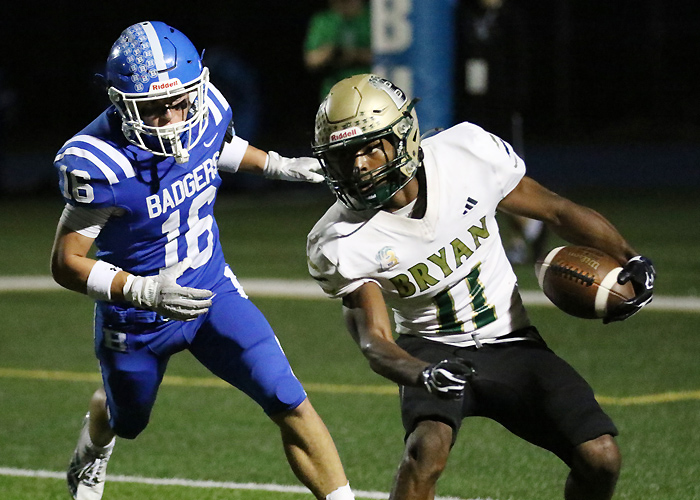
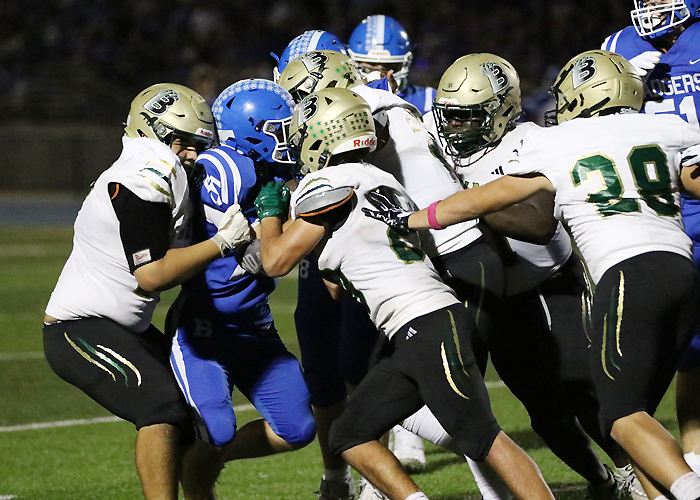
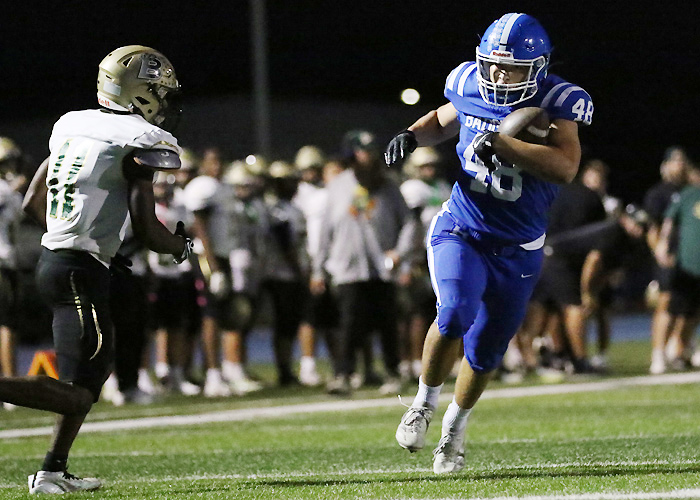
Week 1 Football Game Photos (Westside 42, at Creighton Prep 10)

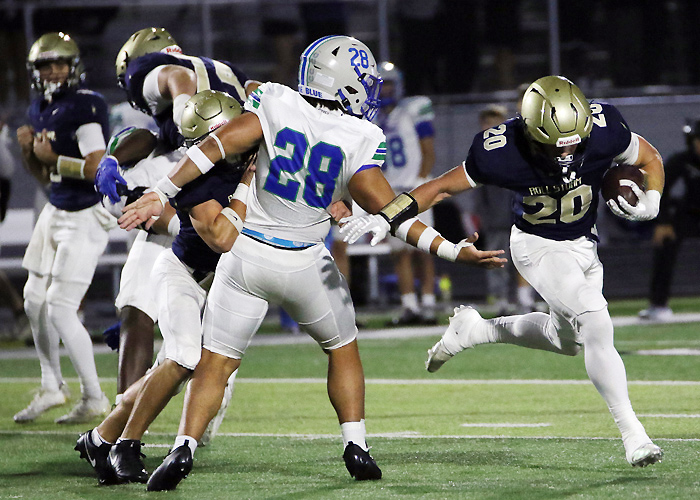
Westside wide receiver Andrew Tagge protects the football after making a catch during the Warriors 42-10 road victory at Creighton Prep. The Westside football team recorded its eighth win in a row over the Junior Jays. (Photo by Jack Denker/Sports Plus)

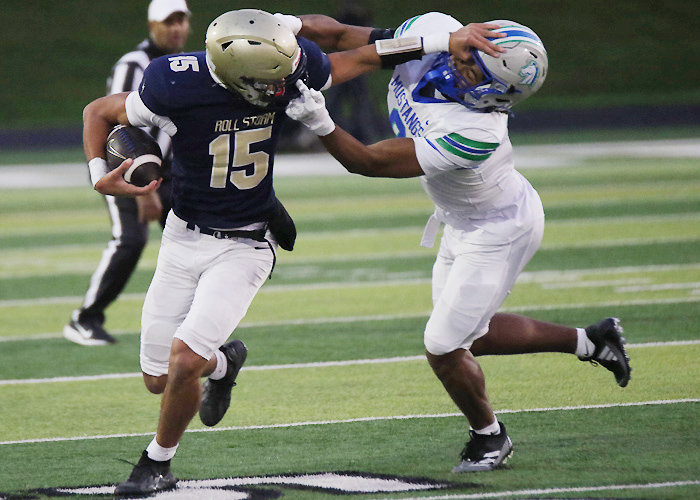
Creighton Prep quarterback Ben Lesley looks for an opening while attempting to avoid a pair of Westside defensive players during Thursday night’s home game at Burke Stadium. (Photo by Jack Denker/Sports Plus)
Football Feature
The huddle still represents a form of communication & team togetherness
THE HUDDLE: A rough circle, an oval. It’s the place where people meet eye-to-eye and shoulder-to-shoulder. The huddle is a metaphor for American history (both in life and sports). It’s in the nation’s collective spirit. At its core, the huddle represents a method of communication and a bond. It’s uniquely designed to get everyone on the same page. The huddle is utilized, to some degree, in all sports. And even though it seems to be omnipresent, no sport is more dependent upon the huddle than the game of football. FYI: football teams have been using a huddle since the late 1890s. The purpose for huddling-up in football is multifaceted: it can be used for clarity purposes (ensuring that every player hears the same thing), motivation, fostering team unity and identifying leaders. To that end, the huddle has been an integral part of the game for over 130 years in Nebraska. In a traditional football sense (where all 11 players huddle-up together), the huddle becomes an opportunity to clearly communicate formations, motions, play calls, audibles and snap counts.
Millard North Coach Allen Burrell believes that communicating correctly in the huddle is critical to consistently executing a play.
“My philosophy on huddling is that it is essential for communicating,” Burrell said, “and for my team to succeed through that brief exchange.”
Larry Martin, who is entering his 26th season as the head football coach at Omaha North, continues to have his team huddle-up for a variety of important reasons.
“I am biased,” Martin said, “but I think it still brings a level of discipline to the team. I think it identifies and reinforces leaders. If you need to communicate with each other, it allows for that. I also think there is a time for no-huddle tempo, but we like to huddle.”
Coaches like Burrell and Martin are rare these days, because more football coaches than ever before prefer the no-huddle philosophy to speed-up the game (and in so doing gain an advantage).
The no-huddle offense in football has been used since the 1950s, but it became really popular in the 1980s and has experienced a resurgence-of-sorts-in the 2020s.
Elkhorn South Coach Guy Rosenberg said the overall pace of play has also impacted the use of the (traditional) huddle in the modern game.
“The tempo of the game has increased,” Rosenberg said, “so a no-huddle system allows players to get more reps in practice and, as a result, perform better in games.”
However, for his program, Rosenberg still feels it’s important to bring the team together (in a “huddle-type” of formation) at the beginning and end of practices, meetings and games, in an effort to create one heartbeat.
“It takes time to build a team,” Rosenberg said. “It’s powerful when a team is all in the moment together on a unified mission.”
At Elkhorn South, Rosenberg said his offensive linemen “sugar” huddle with the quarterback on each play (but the running backs and receivers do not join the huddle).
He said his Storm players do use a traditional huddle (with all 11 players gathering tightly in an oval together) every time they are in their Rhino package.
“To me, the huddle is now more symbolic,” said Rosenberg. “It symbolizes putting the team ahead of individual agendas. It symbolizes the willingness to do the dirty work and to do what is needed for the team to succeed. It’s brotherhood. Communication is the key to success in football, but it doesn’t need a huddle to happen.”
Whether it’s implemented for practical or symbolic purposes, most football coaches agree on at least one thing: that even though it may look and be used differently by each team, the importance of the huddle still exists today. Story by Jack Denker, Sports Plus